Sunday Mood: A Handwritten Font for Authentic, Effortless Charm
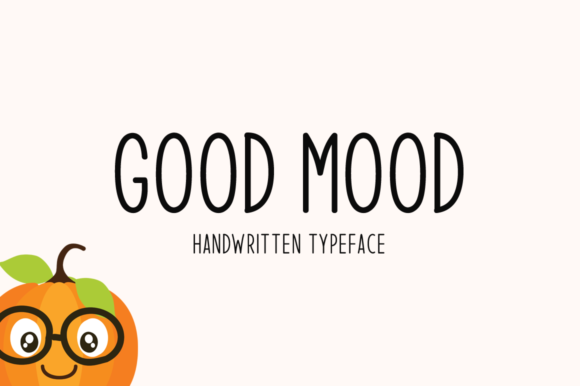
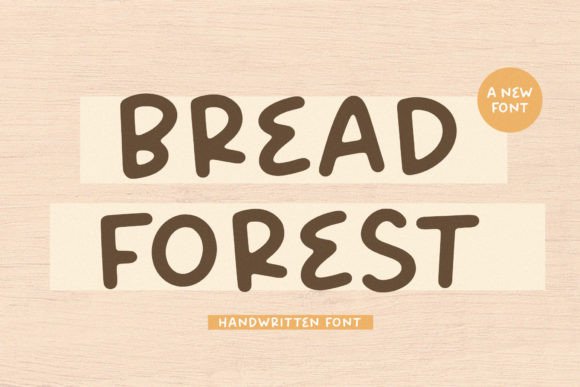
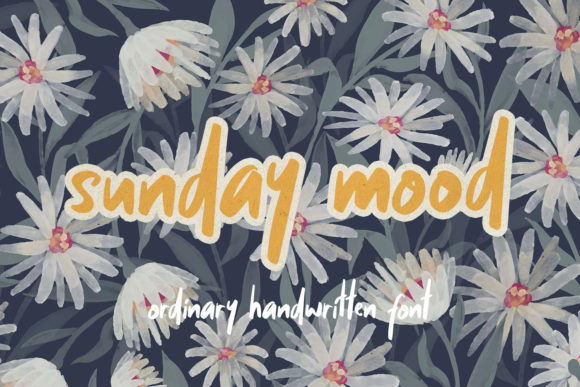
Sunday Mood is a casual, sweet handwritten font designed with natural stroke variation and organic flow. It’s not overly polished or rigid—it breathes like real pen-on-paper writing, with gentle inconsistencies in line weight, subtle entry and exit strokes, and relaxed letter spacing. That authenticity is its defining trait. Unlike many script fonts that prioritize uniformity or flourish-heavy elegance, Sunday Mood leans into warmth and approachability—making it especially effective when you want to evoke sincerity, calm, or quiet joy.
What Sets Sunday Mood Apart from Other Handwritten Fonts
Many handwritten fonts fall into two broad categories: tightly controlled calligraphic scripts (often used for formal invitations or luxury branding) and loose, sketchy brush scripts (common in energetic social media graphics). Sunday Mood occupies a distinct middle ground. Its letters connect smoothly but never force continuity—some glyphs remain deliberately unjoined, preserving readability without sacrificing personality. The lowercase a, g, and y feature open, friendly shapes; ascenders and descenders are modest, avoiding visual clutter at smaller sizes.
This balance makes Sunday Mood unusually versatile across formats. It holds up well on Instagram captions at 24–32px, reads clearly on printed greeting cards, and retains character even when scaled down for product tags or packaging labels. That adaptability isn’t accidental—it reflects intentional design choices around x-height, contrast ratio, and spacing rhythm.
Where Sunday Mood Fits in Real-World Creative Work
Consider three common scenarios where Sunday Mood consistently delivers strong results:
- Instagram and social storytelling: When pairing text overlays with soft-lit lifestyle photos—think coffee shop moments, weekend journal spreads, or slow-living reels—Sunday Mood adds narrative texture without competing with the image. Its light stroke contrast ensures legibility over muted backgrounds, and its informal tone aligns naturally with captions that feel personal rather than promotional.
- DIY paper crafts and printables: For printable planners, wedding stationery, or handmade gift tags, Sunday Mood bridges craft authenticity and typographic clarity. It avoids the “too perfect” look of digitized calligraphy while staying more refined than freehand-drawn alternatives. Users report fewer alignment issues when cutting vinyl or printing on textured cardstock compared to higher-contrast scripts.
- Branding elements with emotional resonance: Small businesses centered on wellness, mindfulness, baking, or artisan goods often choose Sunday Mood for secondary typography—logos may use a clean sans serif, but Sunday Mood appears in taglines, website subheads, or packaging copy. Its warmth supports messaging about care, presence, and intention without sounding saccharine.
Tradeoffs to Keep in Mind
No handwritten font excels in every context—and recognizing Sunday Mood’s boundaries helps avoid misalignment. Its relaxed structure means it’s less suited for long-form body text. Paragraphs set entirely in Sunday Mood can fatigue readers quickly due to reduced character distinction and inconsistent baseline alignment. It also lacks stylistic alternates (like swash capitals or discretionary ligatures), so designers seeking layered typographic hierarchy may need to pair it thoughtfully with a supporting typeface.
Another practical consideration: Sunday Mood performs best when used intentionally—not as a default replacement for all text. Overuse dilutes its impact. In multi-font layouts, it shines most when given breathing room: generous margins, ample line height, and minimal competing decoration.
Comparing Fit Across Design Goals
Choosing whether Sunday Mood fits your project depends less on aesthetics alone and more on functional alignment. Ask yourself:
- Is readability at small sizes critical? If you’re designing app UI elements, email headers under 18px, or dense infographics, Sunday Mood may require careful testing—or an alternative with tighter counters and stronger stroke definition.
- Does your brand voice lean toward playful, nostalgic, or serene? Sunday Mood reinforces tones of ease and groundedness. It feels less at home in high-energy fitness campaigns or tech-forward startups where sharpness and precision carry more weight.
- Are you working across multiple languages or character sets? Standard versions typically support Latin-based languages (English, Spanish, French, German, etc.) with basic diacritics. Extended language support—such as Vietnamese tone marks or extended Cyrillic—is uncommon unless explicitly stated by the foundry. Verify coverage before committing to multilingual projects.
When to Choose Sunday Mood—and When to Look Elsewhere
Sunday Mood is often the right choice when your priority is emotional resonance over technical versatility. If your goal is to make a handmade soap label feel quietly special, turn a digital quote graphic into something that invites pause, or give a blog post subtitle gentle emphasis—Sunday Mood serves those aims reliably.
Conversely, consider alternatives if:
- You need consistent vertical rhythm across dozens of pages of editorial content;
- Your layout requires tight kerning control for tight headline stacking;
- You’re building a scalable design system requiring multiple weights (light, bold, condensed) or matching sans-serif companions;
- Your audience includes readers with low vision, and WCAG AA+ contrast compliance is non-negotiable for body copy.
In those cases, pairing a highly legible sans serif with a single-line decorative script—or selecting a more robust handwritten family with optical sizing—may better serve long-term usability and consistency.
Practical Tips for Getting the Most From Sunday Mood
Because Sunday Mood thrives on restraint, thoughtful application matters more than technical complexity. Here’s what experienced designers observe:
- Pair it wisely: A neutral, slightly rounded sans serif (like Poppins, Nunito, or Montserrat Light) creates a harmonious contrast—clean structure against soft gesture. Avoid overly geometric or harsh sans serifs, which can clash tonally.
- Respect its scale: Use it at 20px minimum for web, 10pt minimum for print. At smaller sizes, letterforms begin to merge visually, especially in words with repeated curves (e.g., “beautiful,” “coffee”).
- Test color contrast early: Its thin strokes demand sufficient background contrast. On light gray or off-white backgrounds, even black Sunday Mood can appear faint. Try 90% black or a deep charcoal instead of pure #000 for richer depth.
- Limit caps usage: Uppercase settings work best for short phrases (under four words). Longer blocks lose rhythm and become harder to scan. Reserve all-caps for logos or singular accent words.
Ultimately, Sunday Mood isn’t about trend-chasing—it’s about choosing a tool that aligns with how you want people to feel when they encounter your work. Its strength lies in subtlety: the slight wobble in a curve, the uneven lift of a terminal, the unhurried pace it implies. That’s why it endures beyond seasonal aesthetics—not because it shouts, but because it listens.