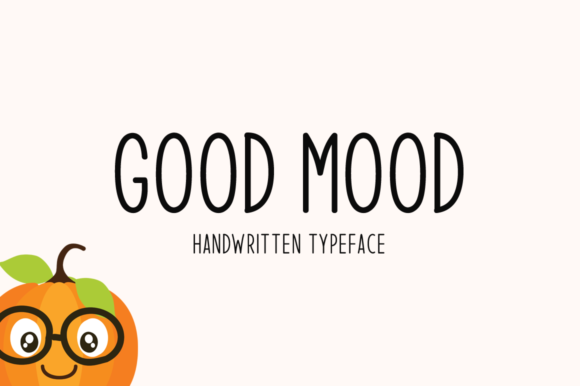
Good Mood: A Natural Handwritten Font
Good Mood isn’t just another script font—it’s a quiet, confident voice on the page. Thin, unhurried, and unmistakably human, it carries the warmth of pen-on-paper without the fussiness of over-styled calligraphy. Designed to feel effortless, not engineered, Good Mood invites clarity rather than distraction. It’s the kind of typeface you reach for when authenticity matters more than ornamentation—when your message needs breathing room, not boldness.
What Makes Good Mood Stand Out
At its core, Good Mood is built on restraint. Its letterforms are light in weight, with gentle contrast and open counters that keep text legible even at smaller sizes. There’s no forced flourish or exaggerated swash—just consistent rhythm, subtle variation in stroke endings, and a natural flow between characters. That simplicity is its strength: it doesn’t compete with your content. Instead, it supports tone—calm, approachable, grounded.
Unlike many handwritten fonts that skew either overly decorative or artificially “quirky,” Good Mood stays neutral enough for professional use but warm enough to signal care. It works because it feels intentional—not random, not rushed, not trying too hard.
Creative Applications That Feel Right
Because Good Mood balances personality with practicality, it adapts well across formats and intentions. Here’s where it shines—and how to use it with purpose:
- Editorial storytelling: Pair Good Mood with a clean sans-serif (like Inter or Lato) for body text. Use it sparingly—for pull quotes, subheads, or short captions—to add texture without sacrificing readability. A wellness blog post about mindful mornings gains quiet resonance when the headline reads “Breathe In. Begin.” in Good Mood.
- Small business branding: Cafés, bookshops, ceramic studios, and independent therapists often lean into warmth and trust. Good Mood fits naturally on packaging labels, receipt stamps, or shop signage—especially when paired with muted tones and ample white space. One local florist uses it for seasonal greeting cards (“Spring Is Blooming”) alongside hand-drawn botanical line art.
- Educational materials: Teachers and course creators find Good Mood effective for worksheets, reflection prompts, or slide headers—particularly in SEL (social-emotional learning), mindfulness, or creative writing contexts. Its soft presence lowers perceived pressure, making tasks feel inviting rather than demanding.
- Digital interfaces: While not intended for long-form UI text, Good Mood works well in micro-interactions—think confirmation messages (“You’re all set!”), onboarding tips, or illustrated email headers. Just limit usage to short, high-impact phrases and ensure sufficient contrast against backgrounds.
How Different Users Can Adapt It Thoughtfully
Your goals shape how Good Mood functions—not the other way around. A freelance designer might use it to differentiate client deliverables (e.g., mood boards with handwritten annotations), while a blogger may apply it selectively to emphasize personal voice in an otherwise structured layout. The key is intentionality, not ubiquity.
For marketers: Use Good Mood to soften CTAs in nurturing emails (“Let’s chat soon”) or highlight values-driven statements (“We grow slowly, thoughtfully”). Avoid cramming it into dense product grids or comparison tables—its light weight loses impact there.
For educators and coaches: Try pairing Good Mood with bullet journal–style templates. A habit tracker with “Today I chose kindness” in Good Mood reinforces mindset without visual noise. Consistency matters: stick to one size and color per document unless variation serves a clear hierarchy.
For publishers and zine makers: Good Mood excels in tactile, small-run print. Its thin strokes reproduce cleanly on uncoated paper, and its casual energy complements analog aesthetics—think offset printing, riso layers, or hand-bound covers.
Keeping Results Clear and Audience-Friendly
Even the most expressive font falls flat if misapplied. With Good Mood, clarity starts with restraint. Ask yourself: does this usage support understanding—or just decoration?
Stick to these practical guidelines:
- Limit scope: Use it for headlines, quotes, logos, or short labels—not paragraphs, navigation menus, or data tables.
- Respect contrast: Pair it with darker, bolder typefaces for balance. Never place it over busy photos or low-contrast gradients.
- Test real-world legibility: View it on mobile screens at 16px and on printed samples at 14pt. If letters blur together or spacing feels uneven, scale up or simplify context.
- Maintain consistency: If you use Good Mood for section headers, use it for all section headers—not just the ones you like best. Predictability builds trust.
- Avoid over-personalization: Don’t stretch, skew, or layer effects (drop shadows, outlines) unless part of a deliberate, repeatable system. Its power lies in its honesty—not manipulation.
Real Ideas You Can Start Today
You don’t need a full rebrand to begin. Try one of these low-lift, high-impact experiments:
- Redesign your email signature with a single line in Good Mood—“Warmly,” or “With care”—beneath your name.
- Create a printable weekly reflection sheet: three lines in Good Mood prompting “One thing I’m proud of,” “One thing I’m learning,” and “One thing I’m grateful for.”
- Use Good Mood in Instagram Stories for quick, handwritten-style tips—paired with a solid background color and minimal iconography.
- Add it to a physical product: stamp Good Mood onto kraft tags for handmade goods, or engrave it lightly on wooden coasters.
- Build a simple Notion template where Good Mood appears only in toggle headings—giving structure warmth without clutter.
None of these require design expertise. They rely instead on noticing where humanity already belongs—and letting Good Mood quietly hold that space.
Good Mood works best when treated as a tool—not a trend. It won’t fix weak messaging or replace thoughtful strategy. But when matched to the right idea, audience, and context, it helps ideas land with sincerity, not strain. That’s not just good typography. It’s good sense.