Takepipbo: A Handwritten Font with Natural Flow and Warm Character
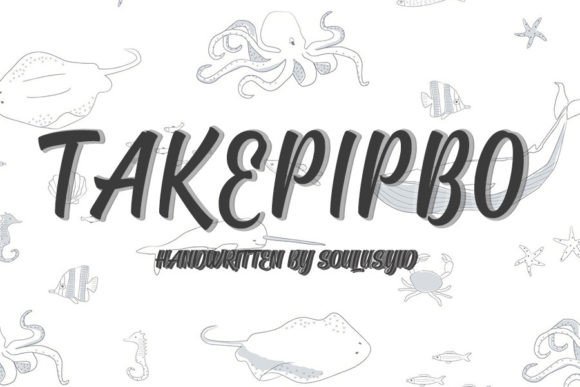
Takepipbo is a handwritten font designed to replicate the organic rhythm and expressive variation of real pen-on-paper writing. Unlike many script fonts that rely on uniform spacing or overly stylized flourishes, Takepipbo emphasizes subtle inconsistencies—slight shifts in baseline, variable stroke weight, and letterforms that connect with gentle, intuitive flow. This isn’t just decorative cursive; it’s a carefully crafted typeface built for authenticity, where each character feels intentionally placed rather than algorithmically repeated.
What Sets Takepipbo Apart From Other Handwritten Fonts
Many handwritten fonts fall into one of two categories: highly formal scripts (often based on calligraphy traditions) or casual, “doodle-style” fonts with exaggerated irregularity. Takepipbo occupies a thoughtful middle ground. Its lowercase letters feature soft entry and exit strokes, natural tapering, and modest ligatures—enough to suggest movement but not so many that readability suffers. Uppercase characters retain personality without sacrificing clarity, making them suitable for titles or short emphasis lines.
This balance makes Takepipbo especially effective when legibility matters alongside warmth—such as names on wedding invitations, short messages on greeting cards, or product labels where brand tone leans personal but not playful. It avoids the stiffness of digitized calligraphy fonts and the visual noise of ultra-casual handwriting fonts that can blur at smaller sizes or in dense layouts.
Where Takepipbo Fits in Real-World Design Projects
Takepipbo shines in contexts where human connection is part of the message. Consider these practical examples:
- A small-batch bakery printing thank-you notes to customers—the font reinforces the artisanal, hands-on identity without looking like a generic template.
- A photographer designing digital save-the-dates: Takepipbo adds intimacy to a modern layout, bridging the gap between polished design and personal touch.
- An indie author formatting an ebook cover or chapter headings: its distinctive rhythm helps convey voice and intentionality, especially in memoirs or literary fiction.
It works best at medium-to-large sizes (16pt and up for body text, 24pt+ for headlines), where its nuanced details remain visible. At very small sizes—like fine print on packaging or footnotes—it may lose some of its charm due to reduced stroke contrast and tighter spacing.
Comparing Approaches: When Handwritten Fonts Add Value vs. When They Don’t
Choosing a handwritten font like Takepipbo isn’t about trend-following—it’s about aligning typography with purpose. In branding, for instance, handwritten styles often signal approachability, creativity, or heritage. But they also carry assumptions: informality, intimacy, and sometimes even fragility. That means Takepipbo may be less appropriate for law firm stationery, technical documentation, or enterprise dashboards where neutrality and authority are priorities.
Compare this with sans-serif fonts, which prioritize efficiency and universality, or serif fonts, which often suggest tradition or gravitas. Takepipbo doesn’t replace those—it complements them. A common, effective pairing is using Takepipbo for a headline or signature element alongside a clean, readable sans-serif for body copy. This combination leverages contrast: warmth in voice, clarity in information.
Strengths and Practical Tradeoffs
One of Takepipbo’s core strengths is its consistency within variation. Because it was drawn by hand—not generated algorithmically—it avoids the mechanical repetition found in some script fonts. Letters like “a,” “g,” and “s” have distinct, recognizable shapes across different words, supporting faster word recognition. That contributes to better scanning and retention, especially in short-form contexts like social media graphics or event signage.
However, that same attention to natural variation introduces tradeoffs. Takepipbo has limited language support compared to system fonts or widely distributed type families. If your project requires extended Latin characters, diacritics, or non-Latin scripts (e.g., Cyrillic or Greek), you’ll likely need to supplement with another font—or verify coverage before committing to full implementation.
Also worth noting: Takepipbo is a single-weight font. It doesn’t include bold, italic, or condensed variants. That simplifies usage but limits typographic hierarchy options. Designers who rely on weight shifts to indicate emphasis must use color, size, or spacing instead—techniques that work well but require more deliberate layout planning.
How Takepipbo Compares With Broader Handwriting Categories
Handwritten fonts generally fall along a spectrum from formal to casual. At one end are copperplate or Spencerian-inspired fonts—tight, precise, high-contrast, and technically demanding. At the other are sketchy, marker-like fonts meant for youthful energy or creative brainstorming. Takepipbo sits closer to the center: relaxed but intentional, friendly but not childish, expressive but still legible.
This positioning makes it more versatile than extreme ends of the spectrum. For example, a formal script might feel out of place on a children’s book cover, while a doodle-style font could undermine credibility in a nonprofit’s annual report. Takepipbo bridges those gaps—offering enough personality to stand out, but enough restraint to remain appropriate across diverse applications.
When to Choose Takepipbo—and When to Look Elsewhere
Takepipbo is a strong choice if your goal is to evoke sincerity, craftsmanship, or quiet confidence—not exuberance or whimsy. It suits designers and creators who value subtlety over spectacle, and who understand that tone is conveyed through texture as much as content.
You may want to consider alternatives if:
- Your project requires extensive multilingual support beyond basic Western European languages.
- You’re building a responsive web interface where font loading performance and fallback behavior are critical—and you don’t have control over hosting or subsetting.
- Your audience includes readers with dyslexia or low vision, and you need tested accessibility features (e.g., OpenType features for letter differentiation, or robust screen reader compatibility). While Takepipbo isn’t inherently inaccessible, its stylistic choices mean it shouldn’t be used for long-form reading or primary navigation.
- You need tight vertical rhythm across multiple weights or widths—for example, in editorial layouts with complex hierarchies. In those cases, a variable font family with optical sizing may offer more flexibility.
Making a Practical Evaluation
Before integrating Takepipbo into a live project, test it in context—not just as a sample word, but as part of your actual layout. Try it at intended sizes, on target devices (especially mobile screens), and alongside any supporting fonts you plan to pair it with. Pay attention to how line spacing affects its rhythm, and whether kerning adjustments improve or disrupt its natural flow.
Also consider licensing. Like most professional fonts, Takepipbo typically requires a license for commercial use—whether for client work, merchandise, or digital distribution. Free alternatives exist, but they often lack the refined spacing, consistent weight modulation, and intentional design decisions that make Takepipbo distinctive. The investment reflects time spent refining hundreds of glyphs, not just generating a quick brush effect.
Ultimately, Takepipbo isn’t about adding “handwritten” as a checkbox. It’s about selecting a voice—one that matches your intent, respects your audience, and holds up under real use. When those conditions align, it delivers quiet confidence: unforced, memorable, and unmistakably human.