Amillina: Where Handwritten Elegance Meets Practical Typography
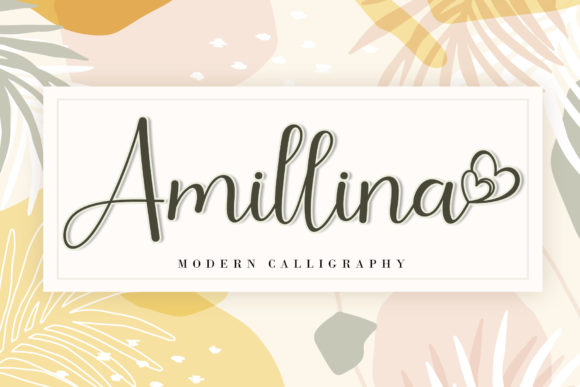
Typography is rarely just about legibility—it’s about resonance. The right font carries tone, intention, and quiet authority. Among the growing landscape of free handwritten typefaces, Amillina stands apart not because it shouts, but because it breathes. Designed with deliberate grace, Amillina is a delicate, elegant, and flowing handwritten font—crafted to feel human without sacrificing clarity or versatility. Its characters are beautifully balanced: each curve flows into the next, each terminal resolves with quiet confidence, and spacing feels intuitive rather than engineered. That balance is why Amillina doesn’t merely sit on a page—it settles into context, adapting to diverse visual languages while retaining its distinct voice.
The Quiet Strength of Thoughtful Letterform Design
What makes Amillina more than just another script font lies in its structural integrity. Unlike many free handwritten fonts that lean heavily into irregularity—sometimes at the expense of readability—Amillina maintains consistent x-heights, rhythmic baseline alignment, and proportional contrast between thick and thin strokes. This isn’t accidental. It reflects an understanding that elegance in typography emerges from restraint and repetition, not randomness. The lowercase a, for instance, features a graceful entry stroke and a softly closed bowl; the uppercase S curves with continuity, avoiding abrupt direction changes. These details matter most when text appears at smaller sizes—or when viewed across devices where rendering fidelity varies.
This attention extends to punctuation and numerals. Many script fonts treat numbers as afterthoughts—clashing stylistically or misaligned vertically. Amillina integrates lining figures that harmonize with its letterforms: the 3 echoes the same soft apex as the h; the 7 carries a subtle upward flick reminiscent of the font’s signature exit swashes. Even the ampersand and quotation marks were drawn—not auto-generated—to preserve stylistic cohesion. For educators designing classroom handouts, researchers annotating visual abstracts, or small business owners typesetting artisanal product tags, this level of craftsmanship translates directly into perceived professionalism and care.
PUA Encoding: Unlocking Expressive Depth Without Complexity
A technical detail often overlooked by non-designers—but critical in practice—is Amillina’s PUA (Private Use Area) encoding. This means every alternate glyph, discretionary ligature, and decorative swash resides in a dedicated Unicode space that modern design tools recognize reliably. No need for complex OpenType panels or font managers. In applications like Adobe Illustrator, Figma, or even recent versions of Canva, users can access flourishes via standard character palettes or simple keyboard shortcuts (e.g., typing “ff” may trigger a connected double-f ligature). For hobbyists learning typography basics or nonprofit teams managing brand assets with limited design resources, this lowers the barrier to expressive typography significantly.
Consider a wedding invitation suite: the main heading in Amillina’s primary form sets warmth and intimacy; a subtle swash on the final “y” of “forever” adds flourish without clutter. Or imagine a teacher crafting a reading comprehension worksheet—the word “journey” appears twice: once in standard form for clarity, once with an extended exit stroke on the “y” to visually echo the concept of movement. These micro-expressions are possible precisely because PUA encoding delivers alternatives predictably—not as hidden glyphs requiring plugin workarounds, but as accessible, stable components of the font file itself.
Real-World Applications Across Diverse Contexts
Amillina thrives where authenticity and approachability intersect with intentionality. Its utility spans far beyond decorative headers:
- Creative professionals use it for mood boards and client presentations—pairing Amillina headings with clean sans-serifs like Inter or Lato creates visual hierarchy rooted in contrast, not competition.
- Educators integrate it into printable learning materials: vocabulary cards with Amillina headers help young readers distinguish between title and content; science lab instructions gain gentle emphasis without visual aggression.
- Small business owners apply it to packaging labels, café chalkboard menus, and local event posters—its organic rhythm signals handmade quality without leaning into clichéd “rustic” tropes.
- Researchers and academics employ it selectively in conference posters or thesis chapter titles—adding typographic warmth to otherwise dense layouts, improving visual scanning and emotional engagement.
- Hobbyists and journalers appreciate its compatibility with digital note-taking apps (Obsidian, Notion with custom CSS) and printable bullet journal templates—where handwriting-like flow supports reflection without demanding calligraphic skill.
Crucially, Amillina avoids overstatement. It doesn’t mimic calligraphy so tightly that it feels performative, nor does it simplify into generic cursive. That middle ground—refined yet unpretentious—makes it uniquely suited for projects where credibility and charm must coexist.
Strategic Pairing and Layout Considerations
Like any expressive typeface, Amillina benefits from thoughtful pairing. Its strengths emerge most clearly when contrasted—not matched. Avoid stacking it with other scripts or overly decorative fonts; instead, pair it with structurally grounded companions:
- For body text: A highly readable, low-contrast serif like Charter or PT Serif provides stability beneath Amillina’s fluid headings.
- For UI or digital interfaces: Neutral geometric sans-serifs such as Manrope or IBM Plex Sans create clear functional separation between navigation and expressive elements.
- For print-intensive work: Slightly tighter leading (line height) compensates for Amillina’s vertical generosity—1.4–1.6x works well for headings; 1.2x for short subheads.
Also consider scale and weight. Amillina has no bold variant—a conscious choice aligning with its handwritten nature. Instead of faux-bold rendering (which distorts stroke integrity), emphasize hierarchy through size, color contrast, or strategic negative space. A 36pt Amillina headline over 18pt body text reads with more authority—and less visual fatigue—than artificially bolded 24pt text.
Accessibility and Inclusive Usage Notes
While Amillina excels in aesthetic and expressive roles, responsible usage requires awareness of its functional limits. As a script font, it is not recommended for long-form body copy, legal disclaimers, or accessibility-critical interfaces (e.g., medical instructions or emergency signage). Its connected forms and variable stroke widths reduce legibility for some dyslexic readers and under low-resolution displays. However, this limitation is contextual—not categorical. When used intentionally—as a headline, logo lockup, or short quote—it enhances inclusivity by offering typographic diversity beyond corporate-default sans-serifs.
Designers working on public-facing materials should follow WCAG contrast guidelines (minimum 4.5:1 for normal text), test rendering on iOS and Android native browsers, and always provide alt text for image-based uses (e.g., social media graphics featuring Amillina text). Educators distributing digital worksheets might embed Amillina headings while keeping instructions in an accessible system font—leveraging its emotional resonance without compromising function.
Why “Free” Doesn’t Mean “Limited”
Amillina is offered as a free download—but its value lies not in cost, but in craft. Unlike freemium fonts that gate essential characters behind paid upgrades, Amillina delivers its full expressive range—including all swashes, alternates, and language-supporting glyphs—in the base package. This transparency supports equitable access: a student in Nairobi designing a graduation certificate, a community librarian in Portland typesetting a poetry zine, and a UX researcher in Helsinki labeling user journey maps all begin from the same complete set of tools.
That completeness also encourages deeper learning. Users aren’t incentivized to “make do” with truncated character sets; they’re invited to explore typographic nuance—how a single alternate g shifts tone, how varying swash length affects perceived formality, how kerning adjustments refine rhythm. In doing so, Amillina becomes more than a resource—it becomes a quiet teacher of typographic empathy.
Integrating Amillina Into Your Next Project
Getting started is straightforward: download the OTF or TTF file, install it system-wide (or load it into web projects via @font-face), and begin experimenting—not with every swash at once, but with purpose. Try these low-effort, high-impact approaches:
- Replace the default heading font in your next blog post draft. Notice how reader dwell time shifts—even before publishing.
- Use Amillina for email subject lines in newsletters (rendered as web-safe fallbacks where needed) to increase open rates through visual distinction.
- In presentation decks, apply it only to section dividers—creating rhythmic pauses that guide audience attention organically.
- For printed materials, test print on matte paper: Amillina’s subtlety gains tactile depth that glossy finishes sometimes flatten.
There’s no requirement to “use it everywhere.” Its power grows from selectivity—from knowing when a human touch matters most. Whether you’re sketching a brand identity, preparing lecture slides, or handwriting a thank-you note scanned to PDF, Amillina offers not just letters, but quiet intention made visible.